

Yesterday, several classmates asked me for money, saying they needed working capital and were about to collapse. I was curious, as this old classmate had always been very strong and would not borrow money unless absolutely necessary. After inquiring, I found out that he had been running a fleet of over 30 trucks for years, specializing in the stone transportation industry in the middle and lower reaches of the Yangtze River. He had made a lot of money in the past few years, but he used it all to buy more trucks and expand his scale.
But due to the three years of the pandemic + the hard landing of real estate, the construction volume in various places has been greatly reduced, no one wants the stones, developers have run away, and local governments do not pay, leading to a broken capital chain. In order to support the trucks and pay the workers' salaries, he sold his house.
I thought I could wait for the recovery, but what I waited for was despair...
A few days ago, the Ministry of Finance and six other departments issued a heavy new regulation:
Strictly prohibit illegal and non-compliant borrowing for municipal infrastructure assets that do not have revenue or insufficient revenue, and shall not increase hidden debts.
The municipal infrastructure here includes subways, high-speed railways, light rail, as well as urban roads, bridges, energy facilities, and almost all large infrastructure configurations.
The old classmate said that after dealing with local governments for so many years, there are almost no infrastructure projects that really make money. After this policy comes down, it also means that all large infrastructure projects across the country will have to stop...
In theory, large infrastructure projects are impossible to stop.
In 2023, China's infrastructure industry investment reached "23 trillion yuan", which is twice the "11 trillion yuan" of real estate investment, accounting for 18% of China's GDP.
Moreover, after the pandemic, the authorities also proposed to take out 40 trillion yuan to expand infrastructure investment and boost the economy, but now they have taken the initiative to stop it, which can only explain one fact: local debt is uncontrollable.
According to the statistics of GF Securities, including hidden debts, in 2023, the local debt scale of 10 provinces including Chongqing, Yunnan, and Guizhou has exceeded 5 times the local fiscal revenue. Among them, Qinghai and Jilin have exceeded 8 times.
The latest revenue and expenditure data released by the Ministry of Finance further confirms the truth. In the first 7 months of this year, the national general public budget revenue decreased by 2.6% year-on-year, while expenditure increased by 2.5% year-on-year, and the fiscal revenue and expenditure gap reached 5.74 trillion yuan.
Among the 31 provincial-level administrative regions, except for Shanghai's surplus of 70.3 billion yuan, the local finances of other provinces are in deficit. Among them, there are 23 provinces with a fiscal revenue and expenditure gap of more than 100 billion yuan; there are as many as 15 provinces with a gap of more than 200 billion yuan, and there are also 4 provinces with a fiscal deficit of more than 300 billion yuan. Sichuan is at the top with a deficit of 41.3 billion yuan, and the other three provinces are Hebei, Henan, and Hunan.
According to the ratio of fiscal revenue to expenditure, except for Shanghai, only Guangdong, Jiangsu, Zhejiang, Beijing, and Tianjin have a self-sufficiency rate of over 80% in the country. Other cities are all relying on borrowing money to operate.
The most important thing is that at least one-third of the cities in the country this year cannot repay the interest on local debts, so we have seen the recent "smashing the pot and selling iron" documents issued by various places, fully calling for the resolution of local debt risks.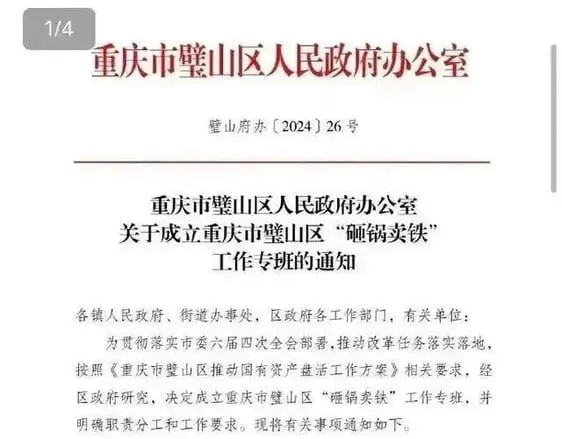
But in fact, the main way of "smashing the pot and selling iron" is still to rely on local state-owned enterprises and urban investment platforms to dispose of or actively revitalize existing assets, thereby realizing them to fill the fiscal gap. But idle houses, land, and industrial parks, in the current environment, not many people are willing to take over.
If "opening up" doesn't work, we can only rely on "cutting expenses". This year, Shandong, Henan, and Northeast China have taken the lead in streamlining the number of public institutions on a large scale, completely launching the "smashing the iron rice bowl movement".
A relative in the system in my hometown said that it's okay to smash it on the surface, but the fear is that the position is still there, but the salary and bonuses are not paid. She hasn't received her salary for several months. If this continues, I'm afraid the house will have to be foreclosed.
Many people say that the decline in housing prices has led to local financial difficulties. But in fact, it is also wrong to completely blame real estate. Real estate is only a catalyst, and the root cause is that most cities have not developed at all in recent years.
This is a terrifying fact.
In fact, developing industries is very challenging. It requires a good business environment, a strong investment promotion team, good geographical advantages and production materials to cultivate or introduce enterprises, invest in production, and develop and grow.
Faced with such a predicament, only a few managers will work hard to overcome difficulties and find a way out, while more people will choose shortcuts: borrowing money to build large infrastructure projects and stimulate GDP.
As long as the GDP is good, they can rise to the top, and as for whether the project can be profitable and how to solve the debt, there will be successors to take care of it.
It is this kind of speculative thinking of "benefiting the present and passing on the debt to future generations" that has led to ghost towns all over the country and loss-making projects everywhere.
For example, after some local high-speed railways were built, they were idle for many years. According to reports, at least 26 high-speed railway stations have been built, but due to their remote locations, insufficient supporting facilities, and low passenger flow, they are either not in use or have been closed.
I went to Xiantao City some time ago, and the nearest high-speed railway station was Tianmen South Station in Tianmen City. People from Tianmen City have to go to Xiantao West to take the high-speed railway... These two strangely located high-speed railway stations can be called the top of the failure in site selection.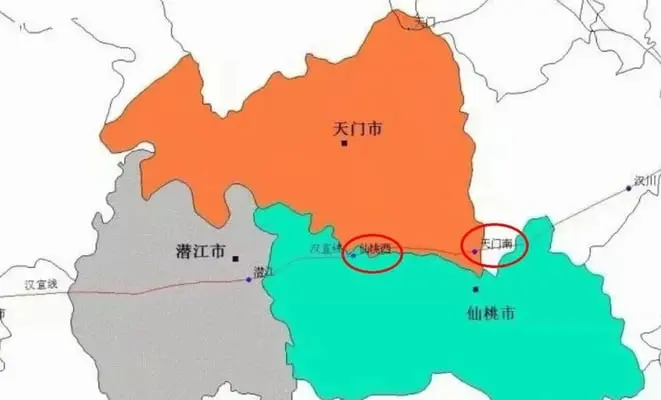
Also, at the beginning of this year, Gansu Tianshui was reported for borrowing money to build a light rail project. The annual income of the first phase was only 1.6 million yuan, while the operating cost was as high as 40 million yuan... The light rail itself is a chicken rib project, with high investment costs, insufficient passenger flow, and slow speed, and it also occupies traffic resources.
Therefore, Shanghai Zhangjiang Tram Line 1, which has been operating for 13 years, has been shut down, and Tianjin Economic and Technological Development Zone Tram Line 1, which has been operating for 16 years, has been dismantled. Qinghai Delingha has been stranded due to safety hazards, but for such a chicken rib product, there are still countless cities reporting and striving for implementation.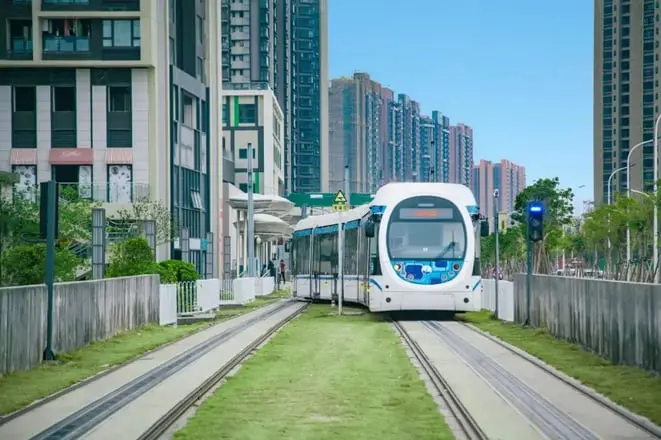
Why? Because the financial subsidy for light rail is a bottomless pit, and a large amount of money has to be invested in it every year, and where did this money go in the end? Only they know best.
There are many, many examples like this. Therefore, the six departments had to issue a document to stop large infrastructure projects. The fundamental logic is that the central government's speed of solving debt is far slower than the local government's speed of accumulating debt.
In this case, it is better to stop all large infrastructure projects as soon as possible and focus on reform.
How to balance the fiscal relationship between the central and local governments, how to expand local tax sources, and at least clarify local debt rights, so that managers are responsible for the results of infrastructure projects, rather than relying on debt to boost GDP.
But in fact, touching interests is often more difficult than touching the soul.