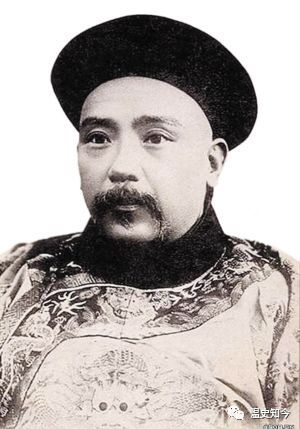
Yuan Shikai (September 16, 1859 – June 6, 1916), courtesy name Weiting, pseudonym Rong’an, Han ethnicity, from Xiangcheng, Henan.
On September 16, 1859, Yuan Shikai was born in Yuanzhai, Wangmingkou Town, Xiangcheng City, Henan Province, to a large landlord family of officials.
His father and ancestors were mostly local gentry. His great-uncle Yuan Jiasan started his career by supervising the Anhui regiment to suppress the Nian Army, and was promoted to the Governor of the Granary. His father, Yuan Baozhong, was a local gentry.
His uncle Yuan Baoqing once led troops in the Jiasan army and held the position of Jiangnan Salt Patrol, and Yuan Shikai was adopted by Baoqing as his heir since childhood. As a youth, he followed his adoptive father to study in Jinan, Nanjing and other places.
After Baoqing’s death, he followed Jiasan’s son, Yuan Baoheng, the Minister of the Ministry of Revenue, to study in Beijing.
In 1876 (the second year of Guangxu) and 1879, Yuan Shikai failed the provincial examinations twice, so he decided to abandon literature and pursue military affairs.
In May 1881, Yuan Shikai went to Dengzhou, Shandong, and sought refuge with Wu Changqing, Baoqing’s sworn brother, and served as the manager of the ‘Qing Army’ camp affairs.
Wu Changqing was the commander of the Huai Army, leading the Qing Army’s six battalions to garrison Dengzhou and supervise Shandong’s defense.
The Yuan family began to flourish during the Daoguang period of the Qing Dynasty. Yuan Shikai’s great-uncle Yuan Jiasan once served as the acting Governor of the Granary and participated in quelling the Taiping Heavenly Kingdom Movement and the Nian Army. He was an important general of the Huai Army, laying a good foundation of connections for his family members such as Yuan Shikai to enter officialdom in the future.
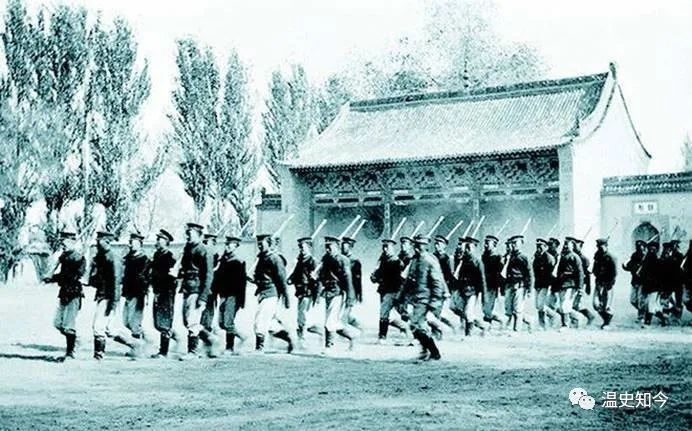
In 1895, Yuan Shikai began to train troops at Xiaozhan, between Tianjin and Tanggu. Ronglu, the Minister of Military Affairs, Li Hongzhang and others appointed Yuan Shikai to expand and train the Dingwu Army, which was renamed the ‘New Army’, and gradually became relied upon by the Qing court.
This army later developed into the Beiyang Six Towns (Beiyang New Army), which was the main force of the late Qing Dynasty’s army, and most of the Beiyang warlords in the early years of the Republic of China also originated from the late Qing Dynasty’s new army.
Yuan Shikai thus supported the Westernization Movement and the New Deal, and was promoted from Taoist officials to governors and governors, to entering the Military Aircraft Department, and even the Prime Minister of the Cabinet.
In the winter of 1899, due to the Boxer Rebellion’s xenophobic behavior in Shandong, the Qing court was forced to replace Yu Xian, the Shandong governor who condoned the Boxers, with Yuan Shikai as the acting Shandong governor. He led the entire new army (then known as the ‘Wuwei Right Army’) to Jinan. This was the first time 40-year-old Yuan Shikai took office as a high-ranking official.
After Yuan took office, he defined the Boxer Rebellion as a ‘left-wing cult’, demolished railways everywhere, pulled down power poles, and disrupted social stability. He changed Yu Xian’s handling policy, drove away the Boxers, and made it impossible for them to gain a foothold in Shandong, forcing them to flee to Tianjin and Beijing.
Empress Dowager Cixi condoned the Boxer Rebellion because the people’s spirit could be used. The following year, the Eight-Nation Alliance war broke out, but Shandong remained stable under Yuan Shikai’s rule and joined the Southeast Mutual Protection, which saved Shandong from the war.
In November 1901, he succeeded Li Hongzhang as the acting Governor-General of Zhili and the Minister of Beiyang, and was officially appointed the following year. Yuan Shikai suddenly became a powerful figure that attracted attention both at home and abroad.
After the signing of the ‘Xin Chou Treaty’, the Qing government, under pressure from both internal and external situations, implemented the New Deal. Yuan Shikai expressed his strong support. In 1901, Yuan Shikai founded Shandong University (now Shandong University) in Shandong.
In 1902, Yuan Shikai concurrently served as the Minister of Political Affairs and the Minister of Training Troops, and trained the Beiyang Regular Army (referred to as the Beiyang Army) in Baoding.
The following year, the Qing government established the Training Troops Office in Beijing, with Prince Qing Yikuang as the Prime Minister and Yuan Shikai as the Deputy Minister, holding real power.
He founded various military academies and hired a large number of Japanese military officers as instructors.
By 1905, the Beiyang Six Towns were formed, with more than 12,500 people in each town. Except for the first town, which was commanded by Manchu aristocrat Tie Liang, the other five towns were under his control, and the important generals were almost all direct military officers from the Xiaozhan training period.
At the same time, Yuan Shikai also served as the Minister of Telecommunications, the Minister of Railways, and the Minister of Conference and Trade Agreements. During this period, he was quite successful in developing Beiyang industrial and mining enterprises, building railways, establishing police forces, rectifying local governments, and establishing new-style schools.
Through the New Deal, he was able to ‘form close ties with the imperial family internally and cultivate party support externally’, and quickly formed a huge Beiyang military and political group headed by him.
Yuan Shikai strongly supported the New Deal, including abolishing the imperial examination, supervising the new army, building schools, and running industries. The first Chinese police force was also established in Tianjin, and he also planned to build China’s first independently built railway—the Beijing-Zhangjiakou Railway.
The expansion of Yuan Shikai’s Beiyang group’s power posed a serious threat to the hereditary position of the Manchu aristocratic group that controlled the central government. The imperial family and nobles instigated some officials to repeatedly impeach Yuan Shikai for his high power and influence, and even predicted that he would follow in the footsteps of Cao Cao and Liu Yu.
In 1906, Yuan voluntarily resigned from various concurrent positions and handed over the first, third, fifth, and sixth towns of the Beiyang Army to the direct jurisdiction of the Ministry of the Army.
In 1907, he was transferred from Beiyang to Beijing to serve as a Grand Secretary of the Military Aircraft Department and the Minister of Foreign Affairs, becoming a key figure in the central government.
In November 1908, Emperor Guangxu and Empress Dowager Cixi died one after another. The young Puyi ascended the throne, and the era name was changed to ‘Xuantong’, with his father Zaifeng as the Regent.
Zaifeng hated Yuan Shikai very much because he opposed many of Yuan Shikai’s New Deal measures, and because of the Wuxu Coup (he suspected that Yuan Shikai betrayed the Reformists, causing Guangxu to be imprisoned by Empress Dowager Cixi until his death). After becoming the Regent, he immediately removed Yuan Shikai from his official positions. Yuan claimed illness and returned to Henan, initially living in seclusion in Huixian, and later moved to Anyang.
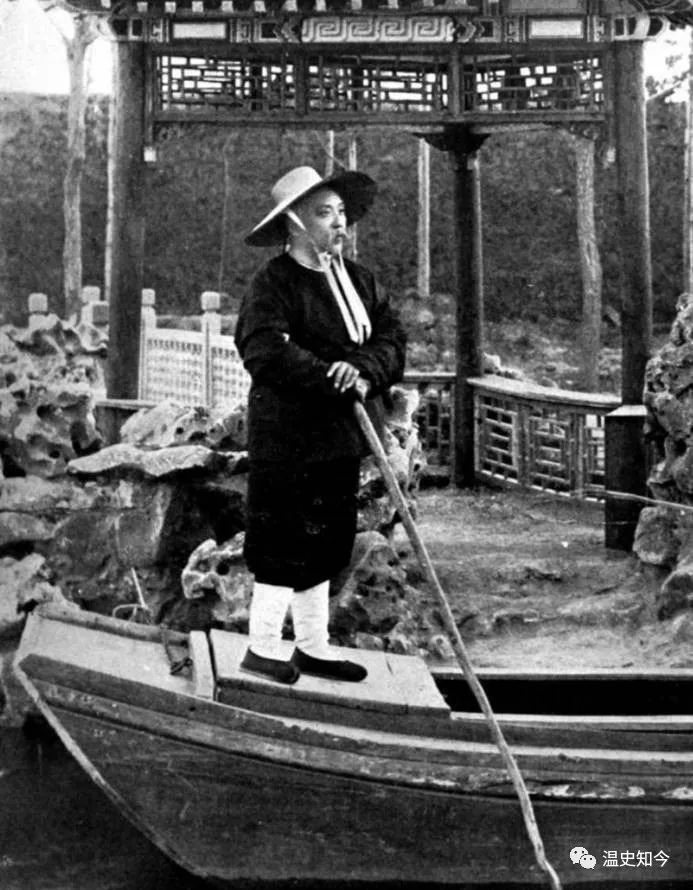
During this period, Yuan kept a low profile and secretly cared about political affairs, waiting for an opportunity to come back. Yuan Shikai, who was dismissed from his post, returned to Huanshang Village in Anyang, Henan, and lived a life of leisure and fishing.
He wrote two poems titled ‘Self-Titled Fishing Boat Photo’, one of which is:
My hundred-year-old heart is always leisurely, my ambition at that time was hard to fulfill.
The old man in the wild carries armor in his chest, the fisherman’s eyes see the little prince.
Thinking about the world without a rock, sighing that the divine state has changed into a broken bowl.
Scattering my hair to the ends of the earth from now on, a fishing boat with a straw raincoat and a bamboo hat.
On October 10, 1911, the Wuchang Uprising broke out, and the Xinhai Revolution broke out, with various provinces in the south declaring their independence one after another.
The Beiyang New Army became the only force that could resist the revolution in the Qing Dynasty, so they were forced to use Yuan Shikai again, first appointing him as the Governor-General of Huguang, and then appointing him as the Prime Minister of the Cabinet.
Yuan Shikai used military force to suppress the revolution in the south on the one hand, and secretly negotiated with the revolutionaries on the other. The revolutionaries also believed that Yuan Shikai was a political leader who could lead China.
On December 29, seventeen provinces in the south elected Sun Wen as the first provisional president of the Republic of China, and the Republic of China was declared established in Nanjing on January 1, 1912, with Sun Wen taking office. At that time, the revolutionaries were retreating, and the three towns of Wuhan had been captured by Yuan Shikai’s Beiyang Army.
On January 16, Yuan Shikai was assassinated by a bomb organized by the Beijing-Tianjin branch of the Tongmenghui on his way home at Donghuamen Dingzi Street, killing ten people including the Yuan Guard Captain, but Yuan Shikai escaped.
In order to end the confrontation between the north and the south, on January 25, Yuan Shikai and various Beiyang generals telegraphed their support for the republic.
On February 12, Yuan Shikai forced the Qing emperor to abdicate, and Empress Dowager Longyu accepted the preferential treatment conditions, and the Qing Dynasty’s rule over China was declared over.
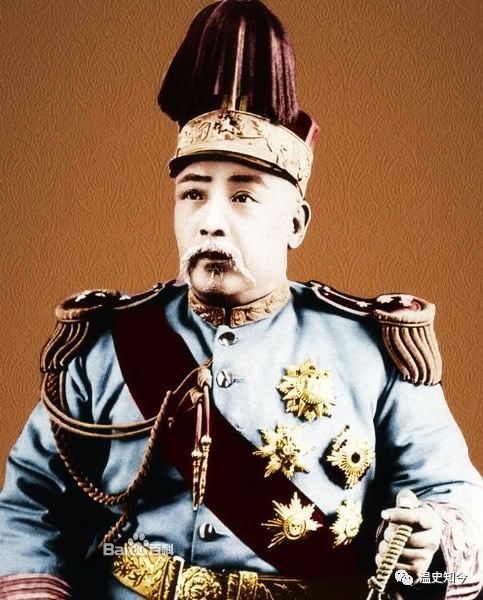
On February 15, 1912, the Nanjing Provisional Senate formally elected Yuan Shikai as the provisional president.
According to the Provisional Constitution of the Republic of China, the presidential system was changed to a cabinet system, which greatly reduced Yuan Shikai’s power, but Yuan insisted on taking office in Beijing on March 10.
At 3 p.m. on March 10, 1912, Yuan Shikai swore his oath of office as the provisional president. The ceremony was held at the former Qing Ministry of Foreign Affairs office in Shidaren Hutong, Beijing.
There were more than a hundred attendees, ‘some wearing Western clothes, some wearing Chinese clothes, some with pigtails, some without pigtails, some with red-robed lamas, some with newly shaved bald heads, with various colors and styles’. British Minister Sir John Jordan also attended the ceremony.
Discover more from 自由档案馆
Subscribe to get the latest posts sent to your email.