History is in the heart of each of us.
2022 is finally coming to an end. Yesterday, a piece titled “2022 Annual Events Review” from NetEase News went viral on WeChat Moments.
From the beginning, “an elderly man in Shanghai apologized to his neighbors in a WeChat group because his wife was infected with the new coronavirus,” to the end of “Guangzhou’s lockdown lifted, citizens cheered in the streets,” the video showed the year we all experienced together.
At the beginning of the video, there is a question mark typed in the search box: What kind of collective memory do we have in 2022?
The media is the writer of collective memory. The news media’s reporting of history itself also forms a form of public memory [1]. At the end of each year, we can see all sorts of people taking up their pens, trying to summarize and comment on “the past year.” This year’s division is particularly large.
Just five days before the release of this video by NetEase, on December 24, People’s Daily also launched a topic on Weibo: “Remember 2022 with 12 sentences,” sharing the words selected by the editorial team: “Bing Dwen Dwen is here to pick up Xue Rongrong from work,” “Mom who picked stars is back,” “Goodbye, communication itinerary card”…
In the forwarding area, the public also gave their own choices for “2022 memories”: “We are the last dai” “His soft lei is his son”…
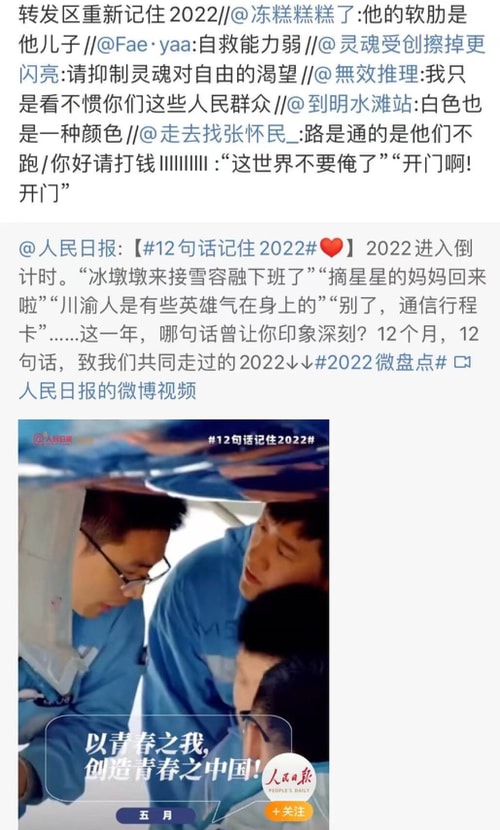
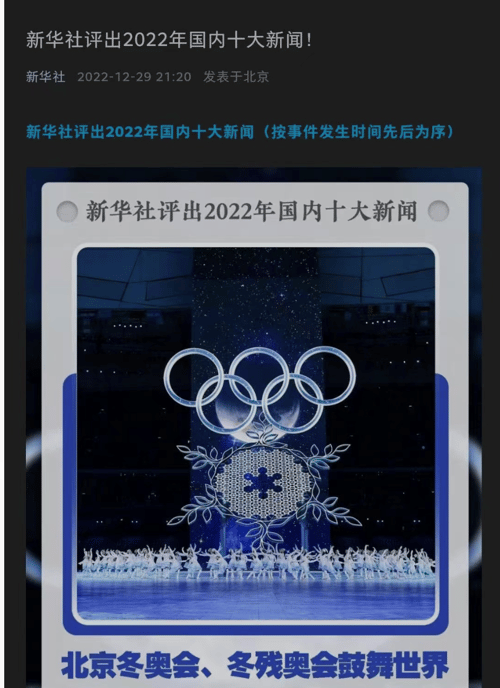
People’s Daily and Xinhua News Agency’s annual review丨Source: Weibo
This year, between market media and official media’s division, in the confrontation between the main text and the comment area, we saw the official and the public discourse, a fierce struggle for the right to speak in collective memory.
Such a struggle is not the first time it has been staged. In early 2003, the SARS virus broke out in China. Ten years later, in 2013, in the reviews of market media and official media, there was also a highly overlapping division as it is today.
“War came suddenly, the government made scientific decisions, the people rose up to fight, and finally achieved victory, thereby defending the dignity of all mankind.” Taking the Southern Daily as an example, the party media presented such a narrative at the time.
At that time, reports from other party media also often used war metaphors, with specific expressions such as “great struggle,” “defense war,” “encounter battle,” “fight a tough battle,” “hunt the virus,” “front line,” “win this battle,” etc. [2].
The narrative of the market media, on the other hand, emphasized the “man-made disaster” part: the official concealment of the epidemic, the absence of media reports, the spread of rumors, and the dereliction of duty of high-ranking officials in the early stages of the SARS outbreak.
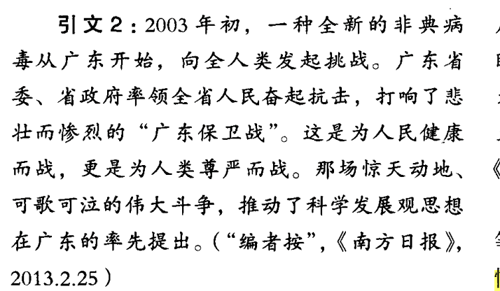
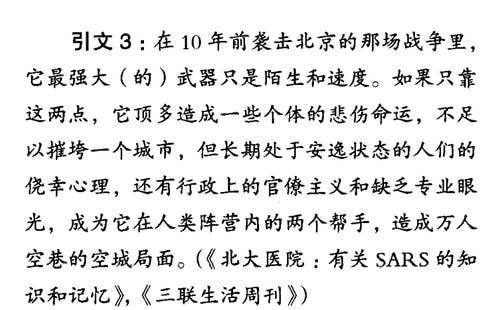
Comparison of official media and market media丨Source: “The “War” that has ended, the “Maze” that cannot be escaped – Metaphorical Application and Media Memory in the SARS Decade Memorial Report”, News Reporter
It can be seen that when summarizing history, we can always hear these two voices – one is the grand history (History) that occupies a dominant position: omitting details, emphasizing conclusions, orderly, claiming to hold the final judgment on history, trying to regulate readers with “truth”; one is the small history (history) scattered outside the mainstream discourse: presenting fragments and details, challenging the government’s role as a “wise decision-maker,” weakening its “innocent victim” image in the face of disasters. [3]
This year, this grand narrative of official discourse has increasingly become a chattering noise in the ears of listeners. And in the comment area and the market media’s real-time records, the public discourse has exploded with greater vitality in its dissemination, gaining recognition and support from the public.
Because this “lowercase” narrative touch is the public’s telling of history, and it is also the real flesh of the world. It approaches the details of history and returns to real life. And the more of this “small history,” the clearer the texture of history, and the more abundant the flesh and blood.
In early December, we published “Heavy Snow Season, Remembering Three Years” (original title: “Written on the Occasion of the Three Years of the Epidemic: Sixteen Major Events and 82 Details”), which compiled some details of the past three years.
After this article was published on Weibo, it received 2.25 million views and 1203 comments: netizens submitted to us, narrating the three-year memory from the people. Recently, we have included it in the original text, forming a new supplementary version of the record, placed at the end of the text in “Read the original text” for everyone to save and read.
In addition to the record, a netizen’s message also pricked us: “I know that if a similar disaster happens again, everything will be repeated.”
In the past three years, from grabbing vegetables to grabbing medicine, from the fear of “will I be quarantined” to the confusion of “will I get a serious illness,” we have experienced the drastic changes in the virus and policies, and there are many scenes and feelings that seem to have never changed.
Today, in addition to the record, we want to ask more questions and try to answer them: In the past three years, how did we get here?
01 From not being able to buy vegetables to not being able to get medicine, why do epidemic prevention policies always deprive people of ways to save themselves?
On December 24, on the Hongwu Road overpass in Nanjing, there was a row of sealed bags containing ibuprofen, each bag with a note saying “2 tablets at a time” and other instructions for use. A comment in the comment area, ranked third in the hot comments: “We should reflect on why such a phenomenon has occurred.”
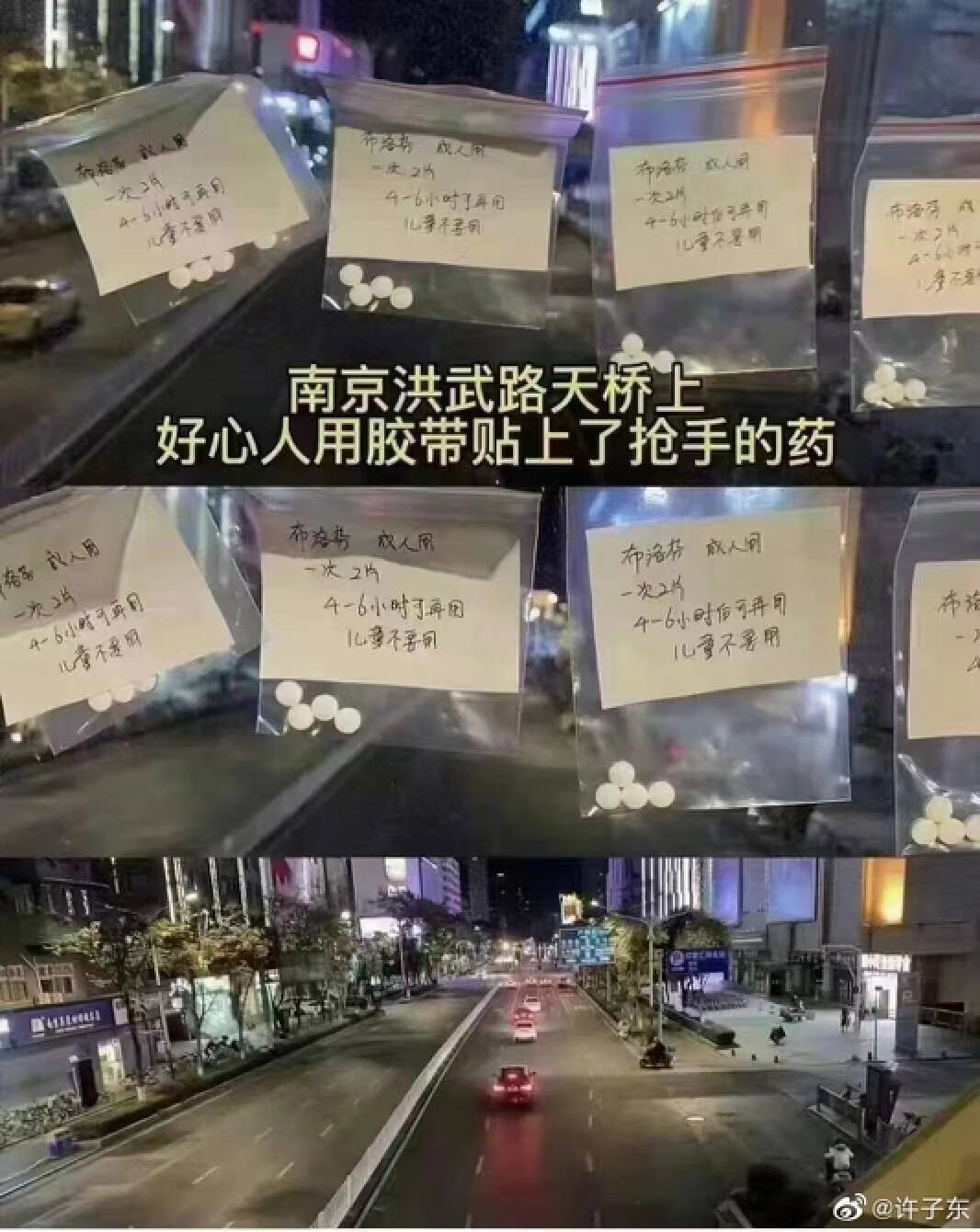
Ibuprofen on the Nanjing overpass丨Source: Weibo
Coincidentally, on December 19, the Tencent travel service team launched the “New Coronavirus Protection Drug Public Mutual Aid” function. By the 23rd, 260,000 times of mutual aid had been achieved [4].
Behind the lively scene of self-help by the people is the huge gap in drug demand caused by the disorderly opening up. Why is ibuprofen’s production capacity insufficient? Why didn’t the public stock up on medicine in advance? The current outcome has long been predictable.
In the past two years, the strict control of the sale of ibuprofen and other four types of drugs has continued across the country. Since 2021, various places across the country have successively issued announcements requiring pharmacies and some medical institutions to suspend the sale of four types of drugs, including antipyretics, cough suppressants, antivirals, and antibiotics [5]. On January 23, 2022, the Beijing epidemic prevention and control work press conference also announced: “In order to further discover and control the risk of the epidemic early, it is required that people who purchase four types of drugs undergo nucleic acid testing within 72 hours.”
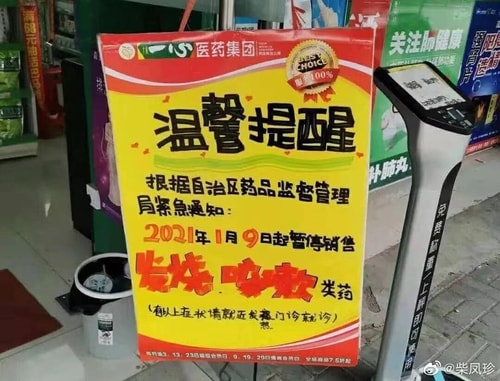
Notice posted at the pharmacy door stating that medicine cannot be purchased丨Source: Weibo
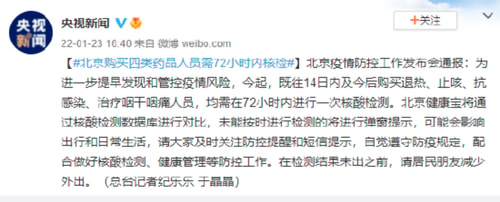
Information on drug purchase restrictions released by CCTV News丨Source: Weibo
The shortage of medicines is not a normal phenomenon in the market economy, but a distortion of the market supply and demand relationship by the previous strict control of sales policies. The difficulty of buying medicine and the inability to buy medicine have continued in various places for two years. In this case, pharmacies will not stock up, and drug companies cannot sell their products, so they will naturally not prepare and store goods [6].
This is a policy that uses power to interfere with the market. Rewinding the memory, the same scene also happened during the lockdown period.
In April 2022, an event in Shanghai called on people to show off their dishes during home lockdown and vote for the best. One work, with 144,000 votes, won a landslide victory, and the name was “A Bitten Steamed Bun.”
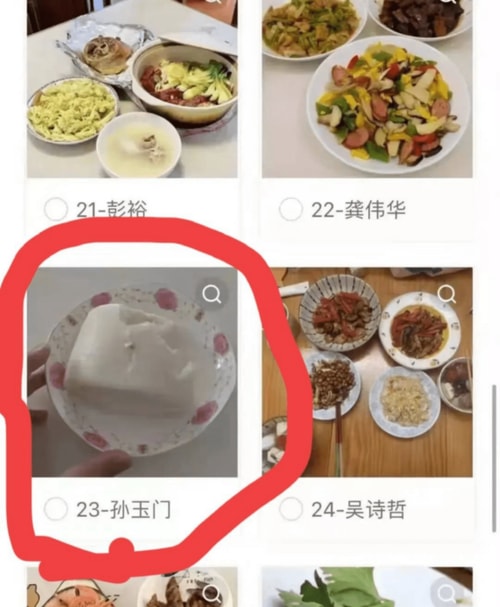
“A Bitten Steamed Bun” won in the cooking competition丨Source: Network
Why did the people of Shanghai at that time have a large-scale shortage of meat and vegetables? According to relevant reports, from March 28, Shanghai Pudong and Puxi implemented rotating lockdowns. In residential areas within the lockdown area, all personnel were not allowed to leave their homes. People could not buy vegetables in the vegetable market or on the app, and could only wait for the community or “group leader” to deliver vegetables to their homes.
When supermarkets, agricultural trade, and markets are closed, and basic logistics facilities such as express delivery and takeaway are blocked, the market economy will be completely shut down, and the original functions of “civil society” will be limited and all transferred to the government.
At this time, the people cannot solve their food, clothing, housing, and transportation in the internal field, just like retreating to an infant who cannot survive independently, becoming the object of government care. And the government at this time changed from the original administrative machine and market regulation machine to an “administrative and market integration machine,” undertaking functions that it could not originally undertake.
Why is it “unbearable”? Because, first, “caring for” a city with a population of millions requires extremely high resource allocation capabilities, and government officials lack corresponding governance experience; second, after power and functions are highly concentrated, supervision and regulation are both absent. The problems of spoiled meat, fake oil, and sky-high vegetables are endless in the process of ensuring supply; third, after the market stops operating, the government has to provide additional subsidies, which increases the financial burden and then squeezes the cost of other public services, reducing the welfare security of the whole society.
Therefore, from the shortage of vegetables during the lockdown period to the shortage of medicine during the opening up period, in essence, they are the results of the same policy logic: the excessive intervention of power in the market, which makes the functions of civil society cede to the government.
The food for daily eating and the medicine for treating diseases, during the lockdown period and the opening up period, have become luxury goods at the same time – this absurd picture comes from the shortage created by man.
The instinct of self-care and the normal operation of civil society are the fundamental sources of social resilience. Effective and long-lasting epidemic prevention policies should not only restrict people’s behavior, but should also allow and encourage the actions of each individual: manufacturers produce, merchants sell, and citizens buy.
Using the restriction of people’s initiative and the control of people’s behavior as a means – such a policy is against human instinct and is not a long-term solution.
This policy logic itself is also one of the root causes of the constant contradictions and pain in epidemic prevention and control.
02 Lacking science and honesty, why is there never the truth after the rumors are refuted?
The restrictions on individuals and the market by policies have led to our “not being able to buy vegetables and not being able to get medicine.” And the lack of credibility in information release has led to our inability to “stock up on vegetables and medicine” in advance.
Let’s start from the opening up. On December 7, the day the “New Ten Articles” were released, the Joint Prevention and Control Mechanism of the State Council held a press conference. A reporter from Southern Metropolis Daily raised the question: How is the drug reserve and guarantee for medical institutions to treat patients with the new coronavirus? Do families need to stock up on medicine?
Guo Yanhong, Director of the Medical Emergency Department, answered in this way: “… We have required medical institutions at the county level and above to strengthen the preparation of these symptomatic treatment drugs and antiviral drugs, including traditional Chinese medicine and Western medicine, including antigen test kits. At the same time, through graded and classified treatment, many infected people will choose to be treated at home, so we require grassroots medical institutions and pharmacy retail outlets to also make corresponding preparations, so as to ensure the accessibility of drugs. … Finally, we also want to remind everyone that there is no need to hoard and rush to buy drugs. With the deployment of the entire work, whether in drug sales outlets or in medical institutions, these drugs are sufficient.“
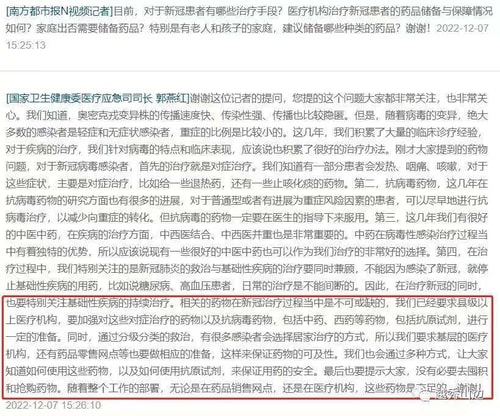
December 7, the press conference of the Joint Prevention and Control Mechanism of the State Council丨Source: Yuexiu Mountain Side
Prepared, sufficient drugs, no need to hoard drugs – this is the information the government conveyed to the public. Coincidentally, why didn’t the people of Shanghai stock up on vegetables in March?
Because, on March 15, 2022, Shanghai issued a clear response, pointing out that the rumors of “Shanghai lockdown” were untrue. On March 23, Shanghai News Radio published an article again, stating, “We hope that the general public will not believe rumors, not spread rumors, and not rush to buy and hoard food and other daily necessities“.
And only four days later, on the evening of March 27, the Shanghai Municipal Leading Group Office for the Prevention and Control of the New Coronavirus Pneumonia issued a notice, stating that Shanghai would implement a lockdown, and residential areas within the lockdown area would be closed for management, and personnel would not be allowed to leave their homes.
Is it a lockdown or not, is it hoarding or not, and even today: are there sequelae or not?
In the past three years, counting the countless reversals of “rumor refutation” and “notices”, you will find that such problems have been with us to this day.
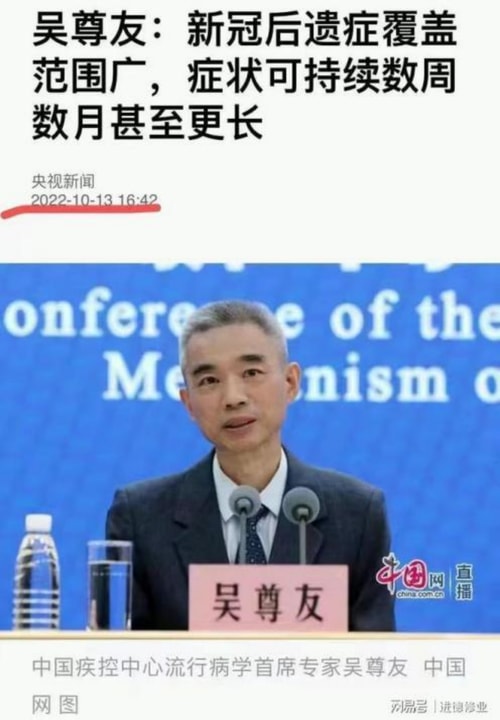
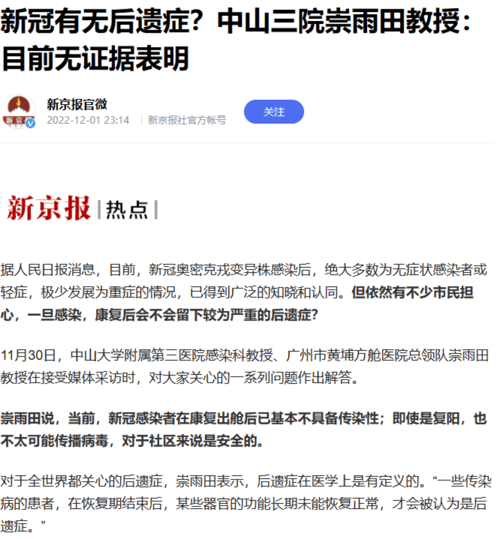
On October 13, Wu Zunyou said that there were sequelae. On December 1, Chong Yutian denied it丨Source: NetEase News, Beijing News
The unpredictable and unreliable policy releases have put the public in a helpless situation where they cannot prepare in advance; the contradictory science popularization has caused the division and alignment of the crowd, and has also caused the public to be confused in cognition and behavior.
In the past three years, many of our “too late” and “don’t know” have come from the lack of reliable information channels. And the most obvious of these is the gradual loss of credibility of authoritative channels of speech.
When official discourse is only constantly “refuting rumors” to the public and selectively popularizing science, but cannot honestly release information, people can only fall into helplessness and confusion.
When a person is dishonest, it takes the entire industry to correct; when an industry is dishonest, it takes the entire society to correct; when a society is dishonest, then no one knows what is true and what is false, and only conspiracy theories are rampant.
03 Believe in the power of the individual
On December 23, 2022, Qingdao announced a set of data: According to monitoring data, Qingdao’s current daily new infections are 490,000-530,000, and the growth rate will increase by 10% on this basis the day after tomorrow (24-25).
On December 25, the Zhejiang Provincial Epidemic Prevention and Control Press Conference also made a data announcement: In Zhejiang, with a population of 65 million, the daily number of new infections has exceeded 1 million.
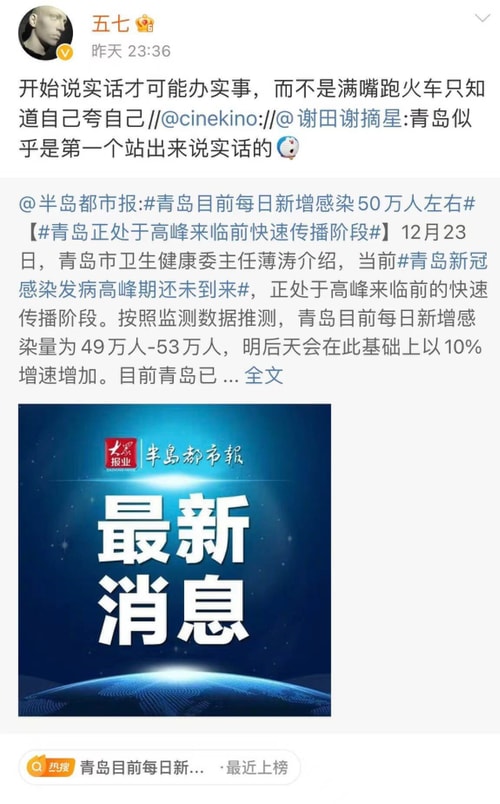
Qingdao announced the data丨Source: Weibo
Under the Weibo that released the data, a netizen commented: “Only by starting to tell the truth can we do practical things.”
And in addition to the announcements of some cities, the current overall number of infected people in China, the severe illness rate and mortality rate of those admitted to medical institutions, whether severe patients have combined infections with other viruses, and the vaccination status of the public, these data are still unclear [7].
Also because of the inability to fully understand the real situation of the epidemic development through official channels, the current public opinion in various places is also extremely chaotic. Some people are extremely panicked, and some people are blindly optimistic [6].
Looking back at the past three years, from lockdown to opening up, we seem to have experienced a huge shift, but we are always in a state of “not knowing”, falling into the confusion of not being able to make decisions and judgments; and we are always in a state of “not being able to buy”, falling into the helplessness of not being able to take care of ourselves.
Tracing back further, from nearly ten years ago, the tenth anniversary of the SARS outbreak, official discourse used the “war” metaphor to retell history and reshape media memory, to today, the struggle between People’s Daily and NetEase News for the right to speak in the “2022 annual memory” – we can see that in the changing events, the unchanging decision-making logic and discourse inertia.
Postmodernism believes that the totality of the world is just a man-made illusion, and the real world is originally composed of fragments: in the details, it is the public’s telling of history, and it is also the real flesh of the world.
From opposing the epidemic prevention policy that deprives people of their subjectivity, to calling for information disclosure, science, and honesty, what we always believe in is the power from the individual itself.
As Southern Weekend said in its New Year’s message in 2012:
This is an era that urgently needs justice, and your adherence to rights is the source of justice.
……
Light up yourself, rights can take root, and active individuals will be born from it, and citizens will be born from it; light up yourself, rights will unite in rights, and civil society will be born from it, and the power to check and balance power will be born from it.
Citizens are strong, and society will be strong. When society is strong, the dignity of citizens can be guaranteed, and every individual can actively participate in the operation of the country’s system.
People deeply love their country, only because she can guarantee justice and security, only because she is constantly “rebuilt” by citizens themselves. The blood vessels between the country and the citizens are connected, so the sadness of the citizens becomes the sadness of the country, and the glory of the country becomes the glory of the citizens.
Whether it is 2013, the tenth anniversary of the SARS outbreak, or 2022, which is being summarized and commented on today: we have never had victory to speak of. And the individual honesty of each person who has experienced it, and the official honesty that is absent in the concealment, lack of information, and the declaration of victory, are always the biggest clues that drive the occurrence and preservation of history.
In the new year, we look forward to, whether official or public, recording and facing ourselves more honestly.
What can ordinary people do at the moment? Our answer is –
Go to support the records that approach the details of history, and to mock the orderly truth. Light up the light of thought and regain the rationality of action.
We must move from exhaustion and rigidity to the revival of humanity; from the bottom-level infighting to the mutual assistance of citizens; from deception and concealment to science and honesty.
We are walking towards the front, and we will keep the true history in the heart of each of us.
Discover more from 自由档案馆
Subscribe to get the latest posts sent to your email.