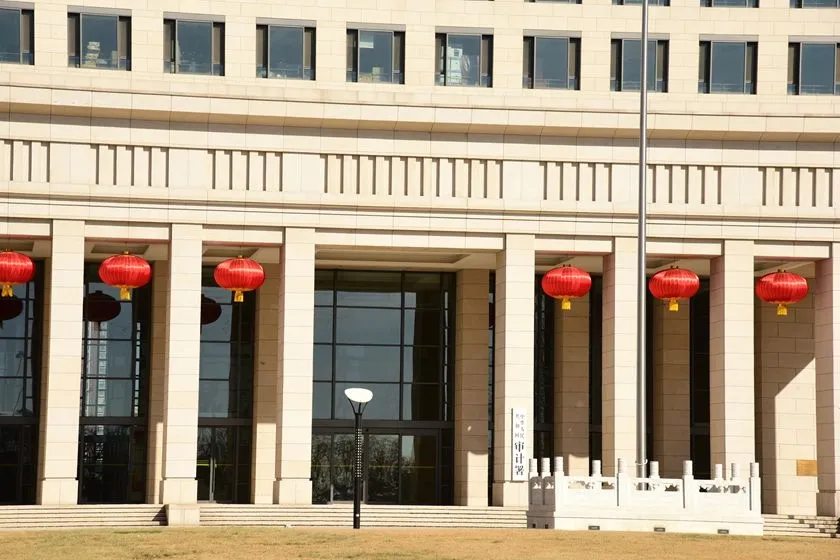
The Audit Office recently released the “Audit Report of the State Council on the Execution of the Central Budget and Other Fiscal Revenues and Expenditures in 2024.” The “Report” stated that in 2024, it focused on auditing 69.261 billion yuan of funds related to the construction of high-standard farmland in 20 provinces and 101 counties. The main problems found were: First, the quantity was inaccurate. 41 counties repeatedly reported land plots that had been completed in previous years, and 87 counties directly falsely reported land plots that had not been completed or even non-cultivated land. The “Report” introduced that the audit of agricultural subsidies revealed that a total of 4.665 billion yuan of problems were found in 20 provinces.
First, 175 counties in 16 provinces withheld and diverted 4.164 billion yuan, which was used to repay local government debts, pay salaries of public officials, etc. By the end of June 2024, the arrears of agricultural subsidies to farmers in relevant areas averaged 1 year, with the longest being 9 years.
Second, 104 counties in 16 provinces illegally defrauded 478 million yuan. The field of agricultural machinery purchase is a frequent area for subsidy fraud. The main reason is that relevant departments did not strictly review the authenticity of agricultural machinery prices and the identities of applying farmers, leaving room for illegal enterprises to defraud agricultural machinery purchase subsidies by issuing false sales invoices and misusing farmer information.
Third, 3,235 grassroots cadres falsely reported and embezzled 23.2966 million yuan. Grassroots cadres in rural areas are the first checkpoint for the review and reporting of subsidy information, and some took advantage of their positions to falsely report and embezzle. For example, since 2018, Lv, the former director of the Finance Office of Shizi Township, Dangchang County, Gansu Province, fabricated information of more than 80 farmers and included them in the subsidy distribution list, and forged signatures to cumulatively embezzle more than 4 million yuan in subsidies, which was used for gambling, etc.
The Audit Office recently released the “Audit Report of the State Council on the Execution of the Central Budget and Other Fiscal Revenues and Expenditures in 2024” (hereinafter referred to as the “Report”). The “Report” stated that in 2024, it focused on auditing 69.261 billion yuan of funds related to the construction of high-standard farmland in 20 provinces and 101 counties. The main problems found were:
First, the quantity was inaccurate. 41 counties repeatedly reported land plots that had been completed in previous years, and 87 counties directly falsely reported land plots that had not been completed or even non-cultivated land.
Second, the quality was not high. 74 counties chose sites in nature reserves, areas with heavy metal pollution, and other areas prohibited by law or not suitable for farming; some high-standard farmland construction arbitrarily reduced construction content, arbitrarily lowered material standards, or failed to connect with the main canal system, etc., making it impossible to irrigate normally. In Qufu and Zouping counties of Shandong, “creating bonsai,” 32 new wells were built in areas with sufficient water sources, and some of them were deeply submerged in water during the water storage period, becoming “wells in water”; 11 pump stations were newly built in places far above the river surface, and they could not draw water after completion, becoming “suspended pumps.”
Third, the management and utilization were not effective. The relevant water conservancy facilities in 35 counties were damaged, etc., and have been out of use for four years, affecting production irrigation; 453,400 mu in 73 counties were used for planting non-grain crops such as flowers, or were left barren, or were occupied by non-agricultural construction projects such as highways.
The “Report” introduced that the audit of agricultural subsidies revealed that a total of 4.665 billion yuan of problems were found in 20 provinces.
First, 175 counties in 16 provinces withheld and diverted 4.164 billion yuan, which was used to repay local government debts, pay salaries of public officials, etc. By the end of June 2024, the arrears of agricultural subsidies to farmers in relevant areas averaged 1 year, with the longest being 9 years.
Second, 104 counties in 16 provinces illegally defrauded 478 million yuan. The field of agricultural machinery purchase is a frequent area for subsidy fraud. The main reason is that relevant departments did not strictly review the authenticity of agricultural machinery prices and the identities of applying farmers, leaving room for illegal enterprises to defraud agricultural machinery purchase subsidies by issuing false sales invoices and misusing farmer information.
Third, 3,235 grassroots cadres falsely reported and embezzled 23.2966 million yuan. Grassroots cadres in rural areas are the first checkpoint for the review and reporting of subsidy information, and some took advantage of their positions to falsely report and embezzle. For example, since 2018, Lv, the former director of the Finance Office of Shizi Township, Dangchang County, Gansu Province, fabricated information of more than 80 farmers and included them in the subsidy distribution list, and forged signatures to cumulatively embezzle more than 4 million yuan in subsidies, which was used for gambling, etc.
The “Report” also stated that the audit of state-owned natural resource assets revealed that the local responsibility for ecological protection in some areas was not fulfilled. This is mainly manifested in three aspects:
First, protection measures were extensive. Although some areas have formulated implementation plans for key ecological projects, they have not been broken down into annual tasks for rolling promotion, lacking effective constraints; some areas have treated pollution in water source areas without addressing the root causes, mainly relying on temporary measures of long-term release of large amounts of chemical agents, and the problem of exceeding standards has not been fundamentally solved; some areas have long used simple landfill methods to treat phosphogypsum, causing pollution to the groundwater and soil in the landfill areas.
Second, the task completion was falsely reported. For example, from 2021 to 2023, some areas reported that 22.7396 million mu of afforestation and other land greening areas had been completed, of which 1.4523 million mu were falsely reported, with a false reporting rate of 6.39%. In fact, the relevant greening tasks assigned by the state were not completed in 2021 and 2022.
Third, the relationship between development and protection was not correctly handled. For example, since 2009, some areas have illegally approved 45 enterprises to open-pit mine in 81 coal mining subsidence area treatment projects, and 48 giant deep pits of 27,000 mu have been formed; from 2021 to 2024, some areas have added 8.2 million tons of high-energy-consuming and high-emission production capacity of coking, calcium carbide, etc. in key ecological environment areas, illegally occupying 45,600 mu of basic grassland, and launching 365 wind power and photovoltaic projects.
The “Report” pointed out that the over-extraction of the ecological environment in the Yangtze River basin has not been fully protected and restored. This is mainly reflected in two aspects:
First, the “chemical industry surrounding the river” has not been completely resolved. Some provinces and cities have discounted and circumvented the “two lists” system for chemical industrial parks and chemical enterprises. Six provinces have arbitrarily lowered standards and approved 71 unqualified parks to obtain “road permits”; six provinces have reduced the scope of investigation, and at least 1,243 chemical enterprises should have been included in the list but were not managed. Six provinces have illegally built 166 chemical projects outside the list of parks; 390 enterprises within the list in six provinces have not discharged pollutants with permits as required, or have not carried out necessary measures such as soil environment status assessment after closure and relocation, affecting the subsequent safe use of the vacated land.
Second, there are shortcomings in the establishment of the ecological compensation mechanism and the promotion of key governance tasks. Among the 11 provinces and cities along the Yangtze River, four provinces and cities have not yet established a horizontal ecological compensation mechanism as required, which affects the enthusiasm of upstream areas to improve water quality. The governance tasks of the “two kidneys” of the Yangtze River, Poyang Lake and Dongting Lake, are not being promoted effectively. Of the 134 ecological remediation projects in Poyang Lake with a planned total investment of 12.03 billion yuan, the actual investment completed only accounted for 7.5% of the planned total investment, of which 51 were overdue and not (completed) construction; since 2014, Dongting Lake has illegally started construction or approved 54 chemical industrial parks, etc., and there are five chemical plants with major pollution hazards that have not been relocated.
Discover more from 自由档案馆
Subscribe to get the latest posts sent to your email.