


Changde Tragedy: Let the condemnation of indiscriminate killings be louder
Recently, an indiscriminate harm incident occurred again in Changde, Hunan, which is heartbreaking.
Such vicious incidents occur frequently, seemingly trapping people in the cycle of "Murphy's Law". Although they are almost numb inside, they still feel shocked when they hear the news.
Regarding such incidents, I have published several short articles on my official account, which have sparked extensive discussion among readers.
Deep reflection on the low ignition point of social emotions, starting from the Wuxi incident
Human joys and sorrows are not connected: A comparative reflection on Li Ziqi's return and the 35 lives
In the comments, some severely condemn the perpetrators' cruel acts, while others try to exonerate the perpetrators from the perspective of "there is a cause for everything" and "being forced to do so".
On social platforms, similar arguments of "being at the end of the road" are even more common, and some even put forward the extreme view that "condemnation is meaningless".
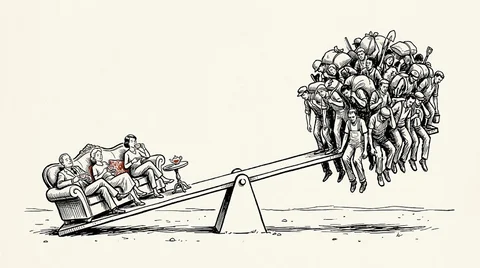
Behind these remarks, there is a moral logic of "injustice—endurance—blood hatred", which attributes the root of the problem too much to external social factors.
However, indiscriminate extreme violent crimes are not simply caused by social injustice; they are the product of the interaction of individual psychology and social environmental factors.
In the transitional period, there are indeed many injustices and institutional defects in society, such as social alienation and relative deprivation, which may become a breeding ground for extreme violence.
Therefore, we need to build a set of fair and just systems and procedures on the platform of modernity to reduce social injustice.
However, macro social factors cannot fully explain why, under similar background conditions, some people choose to create tragic indiscriminate harm, while others do not.
Those frenzied perpetrators, even if they have encountered economic difficulties, emotional setbacks, or grievances, should not be a reason for them to take extreme measures to harm the innocent.
Especially when they take the most vulnerable children as their targets, it makes people filled with righteous indignation.

Such vicious acts of indiscriminate harm can only be done by those scums who are as vicious and inferior as terrorists.
They completely subvert the debt ethics of "the wronged have a head, the debt has an owner", and choose the most extreme and cruel means to harm innocent lives.
For such scums, no matter how much we despise them, it is not enough to relieve our hatred.
For such vicious cases, I firmly oppose classifying them as "revenge on society".
This abstract concept not only cannot accurately reflect the pain of the innocent individuals who are harmed, but may also provide psychological comfort to the perpetrators of extreme violence, and even allow anyone to use "society" as an excuse to do evil.
In a moral context of "understanding" extreme violence, individuals may regard violent behavior as a necessary means to solve problems, and then maintain an anti-social and anti-human "hero" fantasy.
This ambiguous direction and the loosening of potential regulation of moral norms will inevitably enhance the characteristics of crime, form a replication effect, and increase the probability of extreme violent behaviors such as indiscriminate killings.
Therefore, we must resolutely condemn the voice of indiscriminate killings and not give those potential perpetrators any social psychological inducement and suggestion.
At the same time, we should also strengthen our attention to and intervention in individual psychological health to prevent extreme violent incidents from happening at the source.
Only in this way can we jointly create a harmonious and safe social environment.